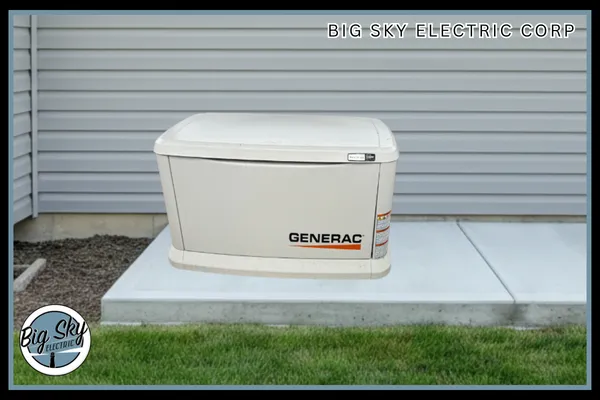
Why Storm Season Is Generator Season 🌧️⚡
If you've lived on Long Island for any length of time, you already know the drill. The wind starts howling. The rain comes down sideways. The lights flicker once… twice… and then, nothing.
Suddenly, the refrigerator is silent, the Wi-Fi disappears, the basement sump pump stops, the heating or cooling system may shut down, and everyone in the house starts asking the same question:
“How long is this going to last?”
After more than 30 years as an electrician, I've seen firsthand how quickly a power outage can go from mildly inconvenient to a genuine problem. And that's why standby generators have become much more than a luxury for many homeowners.
Your Home Uses More Electricity Than You Think
Most people don't realize just how dependent their homes have become on electricity until the electricity disappears. Your refrigerator and freezer need power to keep food cold. Your sump pump may need electricity to keep water out of the basement. Heating and cooling systems rely on electrical components, even when the primary fuel source isn't electricity. Internet equipment, security systems, garage doors, lighting and many medical devices can all be affected by an outage.
A power failure isn't simply about sitting in the dark anymore. It's about losing the systems that make a modern home function.
A Generator Isn't Just a Big Engine
One of the biggest misconceptions I hear is that installing a generator means buying a machine and connecting it to the house. Not quite. A properly designed standby generator system involves much more than the generator itself. The electrical service, transfer equipment, load requirements, fuel source, generator location and the home's overall electrical demand all need to be considered.
A properly installed standby generator can automatically detect a utility outage and transfer designated electrical loads to generator power, often without the homeowner needing to run outside in the middle of a storm.
And that matters.
Because nobody wants to be standing in the rain at 2 a.m. trying to figure out how to start their backup power system.
Whole House or Essential Loads?
Not every homeowner needs or wants the entire house powered during an outage. Some families prioritize the refrigerator, heating system, sump pump, internet and essential lighting. Others want a system capable of supporting most or all of the home's electrical needs. Neither approach is automatically right. The right generator should be based on how you actually live and which electrical loads matter most to you.
At Big Sky Electric Corp., we help homeowners evaluate those needs and determine what type of backup-power system makes sense for their home. We also handle installations with attention to proper electrical connections, permits and required inspections.
Because here's something I've learned after three decades in the electrical business:
The best time to think about backup power is when the sun is shining, not when the basement is filling with water and the refrigerator is warming up.
Storms don't make appointments. Your preparation can. When the next outage comes and eventually, it will, the greatest luxury may not be having every light in the house blazing. It may simply be sitting comfortably inside, listening to the wind outside, knowing your home is still running.
That's not just electricity. That's peace of mind. ⚡🏠
Be sure to follow us on Social Media:
Instagram -https://www.instagram.com/big_sky_electric/
Facebook -https://www.facebook.com/BigSkyElectricCorp
